Stockinette has been the standard carcass covering in lamb and beef processing for generations. Buyers call it by many names (mutton cloth, carcass bag, meat sock, beef shroud), but the product is the same idea: a knitted tube that fits tightly around the meat.
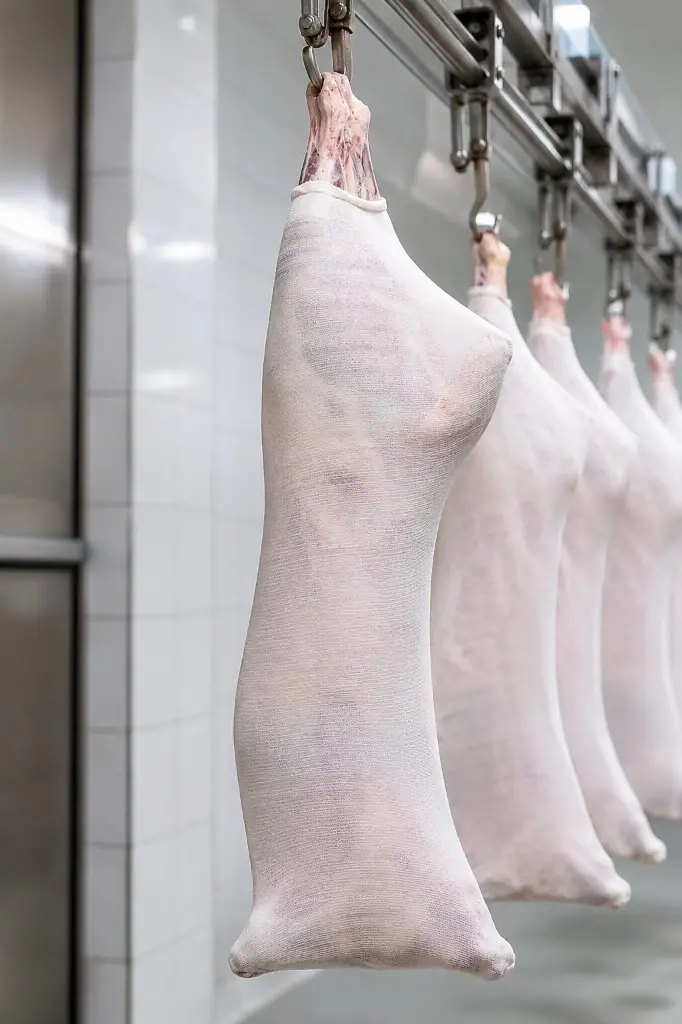
What stockinette does
- Protects against dust, insects and handling contamination
- Reduces surface drying (shrink) in chillers and freezers
- Wicks blood and moisture away from the surface (cotton)
- Keeps fat cover smooth and carcasses compact for loading and display
Types of meat stockinette
| Type | Used for | Format |
|---|---|---|
| Lamb & sheep stockinette | Whole lamb, mutton and goat carcasses | Roll or pre-cut bag |
| Beef carcass bags & shrouds | Beef sides, quarters, veal | Pre-cut bag, shroud or roll |
| Tubular knitted fabric | In-house cutting, automated lines, special cuts | Continuous roll |
Materials
Cotton absorbs best, polyester is strongest with the least lint, and poly-cotton balances both. See cotton vs polyester.
Sizing
Stockinette is sized by laid-flat width and cut length, matched to carcass weight bands and hanging method. See the lamb size guide and beef bag size guide.
Hygiene and certification
Because it touches meat, stockinette should come from a food-safety certified producer. Ask for ISO 22000 or BRC certificates and, for Halal markets, Halal certification. Our certifications.
How to buy
Describe your need
Carcass type, weight range, storage and monthly volume.
Get a specification
Recommended width, length, material and format with price.
Test samples
Free samples on your own carcasses.
Order
Full container in 10–14 business days; FOB, CIF or DAP.
Next step: send us your carcass type, weight range and monthly volume through the quote form and we will reply with a recommended specification within 24 hours.